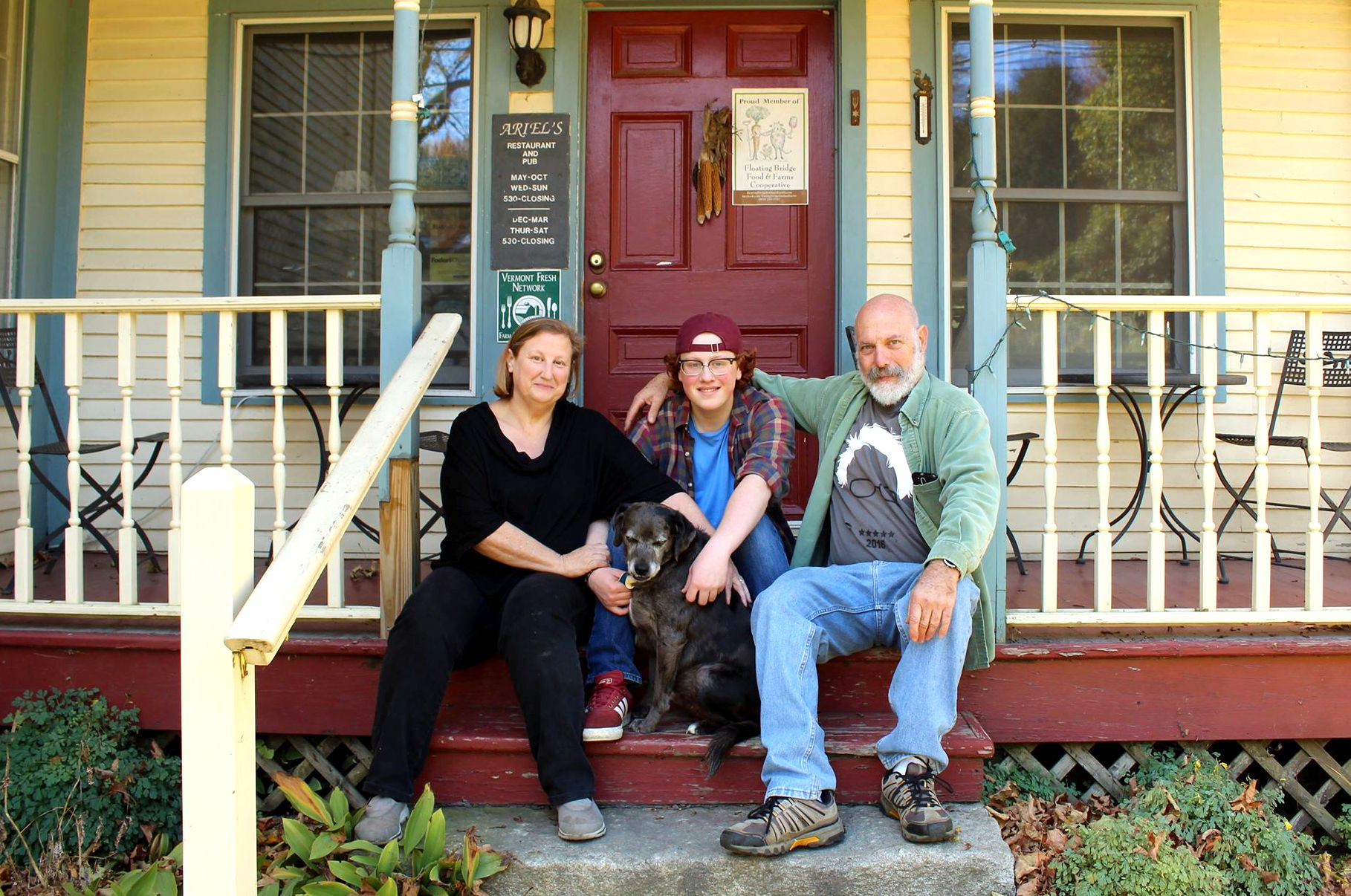
About ten years ago, I decided that it was time to write about my life. I had no real expectation that anyone would want to read my writing, but I decided to put down my thoughts, experiences, and some recipes that reflected the time I lived through. I realize that everyone’s life is important to the players involved, and everyone’s life is different, specific to their time, place, and experience in the world. But I also believe that a passion for food, family, and community is very common, if not universal. So here it is: my story. The recipes are yours to do as you wish- read them, make them, enjoy the results. Or not. I probably won’t ever know.
Prologue
I have spent enough time around actors and chefs to reach a firm, entirely unscientific conclusion: actors are the most insecure people in the world. Chefs are a close second. Both need constant approval, reaffirmation of their talents, and stroking of their fragile egos to continue doing what they do. Scratch a chef, and you’ll find a failed actor – or an actor who never gave their career a long enough try to fail, but left before their ego was crushed by years of constant rejection. Meanwhile, in between auditions, callbacks, and rejections, this actor cooked for his or her (let’s just say her) friends in her tiny New York City or Burbank or Chicago apartment and basked in the glow of mini orgasms of sensual pleasure playing across the faces of those whose approval she sought. “Oh my God, try this…” and “I’ve never tasted anything so…silky” and “I’ll never cook for you again”… but that’s a whole other story.
“You should be a chef!” “You should definitely get paid for this.” “You should open up a restaurant!” Oh, there’s the dangerous one. For every good friend who thinks their friend, the great cook, should open a restaurant, there’s a special place in restaurant hell.
A surprising number of those insecure, approval- seeking actors actually do go into professional cooking. Many of them find cooking an alternate way to satisfy their need to create something. Good chefs are artisans, maybe even, in rare cases, artists. Their art nourishes in a very concrete, measurable way. They can feed someone and make them happy over and over again, and the love and approval just keeps on coming as long as they practice their craft honestly and with real passion. Opening a restaurant is often the natural result of this second act. If the almost-actor-now-chef has learned the craft well and paid their dues, a restaurant might even become successful and serve as a stage on which she can spend her life creating beautiful and delicious new works, honing her skills, and making people very happy for many satisfying years.
The Beginning
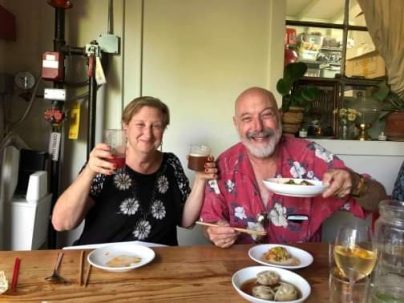
“Have you ever thought of opening a restaurant?”
I had known Richard for a few months when he spoke those frightening words. One marriage, two kids, three dogs and four restaurants later, I’m still not sure what I was thinking when I replied “uh, maybe?”
In hindsight, the fix was in-Richard and I were fated to be together. We both grew up on the East Coast – me in Westchester County, a 40-minute train ride from NYC, and he in Rhode Island, just outside Providence. We both went to college, both majored in theater, and both somehow ended up in seriously rural central Vermont, working in the food service industry.
In between college and Vermont my life had taken quite a few twists and turns. After college I had tried to make it as an actor in New York and like so many other potential Broadway stars had ended up working in restaurants. I was a miserable waiter (not bad, just miserable), so I ended up in the kitchen, and discovered a new way of being creative and earning approval and applause. It wasn’t long before I discovered that I wasn’t very good at working for other people. Even this early in my culinary career I hated working for people who I (erroneously) felt knew less than I did, and (correctly) felt did not have my best interests at heart.
My first restaurant job was at a little East Side business lunch place called Pisces X 2. It did not end well. The owner was paying us less than minimum wage, cash under the table, so we had no workers’ comp insurance. He was also breaking every health department rule in the book. The rats and vermin in the downstairs prep area drove my friend Ilene to fits of terror, and she had been a New York City emergency room nurse, so she’d seen plenty of disgusting sights. After working there for only two months, I helped talk the kitchen staff into walking out en masse after a busy lunch. I would never have walked out during a meal service, but as soon as lunch was over we all took off our aprons and quietly left. In addition, the owner was a screamer, going into a major tirade after each imagined infraction of his many incomprehensible rules. He’s one of the reasons that I’ve never since raised my voice at an employee and why the sound of NPR on the radio is the loudest sound in my kitchen
It took very little time for me to figure out that working for myself eliminated all of the pitfalls involved in being someone’s employee. I was young and naive enough not to realize that the pit I was about to fall into was about as deep and wide as they come.
My buddy Howard had been at Pisces X 2 with me, and after we left we talked for hours at a time about starting a little business of our own. Howard and I had met doing musical theater in Westchester county. We had both just graduated from different high schools, not far from each other. We were both headed to Northwestern University’s theater department in the fall. We became best friends immediately. Howard also loved to cook and had a natural sense of style and an unerring feel for what is elegant and what’s just not acceptable! He was smart, loud, big, flamboyant, and a bit intimidating. He commanded every room he walked into. He and I both had an encyclopedic knowledge of film and musical theater and a love of the most esoteric gossip about barely known actors, writers, directors, and people on the fringes of the theater world. Our friendship saw each other through many years of ups and downs, highs and lows, suicidal depressions and manic interludes.
After college Howard and I moved to New York City separately, but eventually ended up working together and sharing the tiny one-and-a-half room studio that I had rented on the Upper West Side for $240 a month. The location was fantastic – just opposite Zabar’s (a world-renowned foodie mecca) and very close to H & H bagels, which was open 24 hours and sustained us for years on minimal paychecks.
For a while I worked downtown at The Bottom Line, a wonderful music venue where I heard every great band and musician around in 1979 and ’80. I would take the subway to work at 5 PM, work two shows for almost no money (a Heineken was $1.90, so our average tip per drink was 10 cents), then take the subway home at 3 AM and pick up a hot bagel. I left the Bottom Line after one too many nights of being tipped in hashish, cocaine, and LSD by the bands that I waited on backstage. After passing out on the subway one night, I realized things were getting to a scary place.
Howard was working at Pisces and got me a job there doing prep and sometimes working the soup and sandwich station at lunch. After we walked out we started planning a way to use our love of food, our ability to work hard, and a few connections picked up in theater school and around the fringes of the New York theater world. We rented a tiny basement space that contained a double-decker baking oven that was too big for the previous tenants to remove from the space. We outfitted it with second-hand pots and pans, two large folding tables, a telephone, and a twenty-quart Hobart mixer. We developed a menu of simple but delicious cakes, which we wholesaled to restaurants in the Village and Midtown under the name “Half Baked Idea”. We used our connections to do some catering. We did hors d’oeuvres for Lee Strasberg’s final New Year’s Eve party before he died in 1982, and dropped off lunch at Dick Cavett’s apartment. We peered into gorgeous apartments and townhouses that could have fit ten of our apartments plus our bakeshop, with room left over for a family of five. We catered small weddings and an Off-Broadway opening at Circle in the Square. All this out of a tiny, dank space that rented for almost nothing.
Within a couple of months of opening, I realized that Howard and I could not support ourselves on cakes alone so I took a baking job at night for a health food restaurant. I would bake at the restaurant alone from 1 AM to 7 AM, then jog the five blocks to Leroy St. to bake again until 3 PM, at which time I would hop in my trusty 1967 Ford Fairlaine and make deliveries. If I had time, I’d collapse on my baking table and sleep for a couple of hours, then stop at Rocco’s on Bleecker Street for a double cappuccino and head for my night job. By then, Howard and I shared my fifth-floor walk-up studio apartment. I rarely got uptown that year. My job in the restaurant ended one night after I foolishly held a block of soft butter in my left hand and cut it with a sharp knife, slicing easily into the inside of the knuckles of my four fingers. The hippie sauté cook grabbed a box of Cayenne pepper and packed it into the gaping wounds, quickly stopping the bleeding. The cook said it would cauterize the blood vessels leading to my fingertips. The emergency room doctor said that she had never seen anything like it and that it was utter bullshit. It did end the bleeding, and also forever ended the sensitivity to heat or pain in my left hand. Difficult to get used to at first, but actually a very handy attribute for a chef!
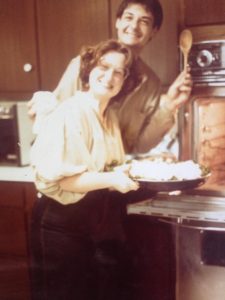
One day after having visited my apartment on one of my infrequent nights off I arrived at the bakery early in the morning to find it blocked off by the fire department. An overnight fire in an apartment above the bakery had caused smoke and water damage, which had destroyed most of our equipment and all of our ingredients and product. We were told that our month to month lease was over. We loaded baking pans and whatever smallwares we could salvage into the Ford and headed uptown. For the next year we lugged 50 lb bags of flour and sugar, cases of butter, eggs, and cream cheese, and bales of boxes up five flights. We baked in our tiny oven at the end of the hallway (the apartment was without a kitchen). Howard took the bedroom. I slept on a mattress under the work table.
About a year after the fire, I drove to Westchester, near the town where I grew up, to cater a crepe party for a wealthy matron. I worked my butt off to create an impressive spread of spinach crepes with sauce mornay, creamy chicken and mushroom crepes, and mini quiches- all of the required 1980’s ladies’ luncheon standards. The woman’s nanny and her children ate most of the food I had brought while I wasn’t looking, causing me to run out before the last of her guests were fed. I, of course, did not charge her, but she dragged me into small claims court anyway, claiming that I owed her money for embarrassing her in front of her friends. She also felt I owed her money for causing a $1,500 set of Danish cookware to become non-kosher when I tried to cook more food in her kitchen for her guests. Not a word was said about her nanny and children not having been included in the guest count. And of course, she had not told me that she kept a kosher kitchen. We went into court and faced the judge, who immediately dismissed the case. Fortunately for me, she did not realize the judge knew my father, who had been the town’s veterinarian for years, and the judge figured that he owed my dad a few favors.
I dodged that bullet, but it seemed as if fate was trying to end Half Baked Idea, and this stage of my culinary career. One morning I dragged six cake boxes down the stairs to the street, only to find that my beloved Ford had been torn apart, leaving only $1,300 worth of unpaid parking tickets fluttering around the shell of the old car. That was the end of my first business. I learned so much about cooking and baking, business, stamina, and life from that period. Howard and I stayed friends for 40 more years and had many, many adventures together. He passed away in 2017 from a life of drinking and indulgence. We were estranged for several years before he died, but had reconnected shortly before. The memories I have of our time together in New York are vivid to this day. Howard gifted me this recipe very early on in our life together. It is the best carrot cake in the world, and these days I make it whenever I need a little Howard in my life.
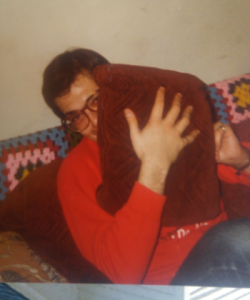
Howard’s Luscious Carrot Cake
preheat oven to 350 degrees
grease and flour a 10 inch round cake pan with 3-4 inch sides
1 C. vegetable oil
4 eggs
2 C. sugar
2 t. cinnamon
1 t. nutmeg
2 t. salt
2¾ C. raisins
t. baking soda
2 C. all purpose flour
3 C. peeled and grated carrots
¾ C. pecans, chopped
In large mixing bowl combine oil, eggs, sugar, cinnamon and nutmeg and mix well. In second bowl combine salt, b. soda and flour. Add to egg mixture and stir to combine well. Stir in carrots, nuts and raisins. Pour into prepared pan and bake until skewer inserted in center comes out moist but clean(about 1 hour). Let cool, turn out of pan. Eat as is, or frost with cream cheese icing or Brandy Glaze.
Brandy Glaze
2 C powdered Sugar
¼ C. brandy or orange liqueur
Mix sugar and brandy or liqueur. Pierce cake all over top with skewer and pour glaze over. Let sit at least 1 hour until serving, or preferably ovenight.
The most popular cake from “Half Baked Idea” was our simple, basic and very delicious New York style cheesecake. It’s a classic: creamy, dense but still quite light, vanilla scented, on a graham cracker crust. This recipe makes one 10 inch cake, about 2 ½ inches high. It feeds at least 16 rabid cheesecake fans. It can be topped with berries in season and served with any fruit sauce or coulis.
New York Cheesecake
Crust:
2 cups graham cracker crumbs
1/2 cup sugar
6 Tablespoons butter, melted
Mix all ingredients together. Press into the bottom of a well buttered 10 inch spring form pan. Bake in preheated 350 degree oven for 10 minutes, or until lightly browned.
Filling:
2 lbs. cream cheese
1 C. sugar
3 eggs
1 C. sour cream
1 tablespoon vanilla
Place Cream cheese in mixer bowl. Mix with paddle on medium speed for one minute. Scrape sides of bowl. Add sugar and start mixing on medium speed. Add eggs one at a time, stopping to scrape bowl after each one. Add sour cream, vanilla and lemon rind and mix until smooth. Pour filling into springform pan with prepared crust. Level top with spatula. Wrap pan sides well with aluminum foil, leaving top open. Place cheesecake pan in larger pan and add one inch of hot water to larger pan. This is called a water bath, which helps it cook evenly and makes it creamy. Carefully place cheesecake in water bath in 350 degree oven. Bake about one hour, or until top is slightly golden, and seems set. Remove from oven. Remove from water bath. Remove aluminum foil. Run a small knife between the inside of the pan and the outside of the cake to keep cracks from forming. Let cake cool. Refrigerate cake for at least 6 hours, or overnight. Remove spring form pan sides. Cut into16 wedges with a hot, wet knife and enjoy!
so glad Ted, Thank you! Miss you guys!
I loved read this and look forward to the next installment
Oh so good! Lee. So many great great stories! I witnessed some of it- and absolutely loved reading it ALL!! More more!! (And yum: I remember, you made me that delicious! carrot cake for my bday- oh so many years ago:) Cheers!
What a great story! Thanks so much for sharing.
Love your story and your story telling ability. Can’t wait for the next installment of your intrepid journey Lee!
Oh Lee. You have left me speechless. I am elated to
read more…and make some goddamn delicious carrot cake. All the love.